

 See My Latest Article on HelloNation

Chemical drain cleaners are sold as a quick answer to a slow or clogged drain, but they can create serious safety and plumbing problems. Their corrosive ingredients may burn skin and eyes, damage pipes, release harmful fumes, or remain in the drain when someone later attempts a repair.
For households in Shelbyville, KY, understanding these risks can help prevent an ordinary blockage from becoming a hazardous plumbing situation.
Why can chemical drain cleaners be dangerous?
Most chemical drain cleaners rely on highly caustic or oxidizing substances to break down organic material such as hair, grease, soap residue, and food particles. Common active ingredients include sodium hydroxide, sulfuric acid, bleach, or similar reactive compounds.
These products do not simply “push” a clog away. They generate heat or chemically react with the blockage. That reaction can:
- Cause severe skin or eye burns
- Produce irritating or toxic fumes
- Damage older, weakened, or improperly connected piping
- Harm rubber seals, washers, and certain drain components
- Splash back when the drain is opened or plunged
- Leave a concentrated chemical solution trapped in standing water
A drain may appear to clear while the product remains inside the pipe. That creates a hidden hazard for anyone who removes a trap, uses a drain snake, or works beneath a sink.
What happens if drain cleaners are mixed?
Mixing drain-cleaning products is especially dangerous. Different formulas can react violently, producing heat, fumes, pressure, or splashing chemicals.
Never combine:
- Acid-based and alkaline drain cleaners
- Drain cleaner and bleach
- Drain cleaner and ammonia
- Drain cleaner and household disinfectants
- Two different drain-cleaning brands or formulas
Even rinsing one product with another can create a dangerous reaction. A person may not realize that residue remains in the drain or trap.
If a product has already been poured into a drain, do not add another cleaner. Read the product label for emergency instructions, ventilate the area without placing yourself in the fumes, and contact poison-control or emergency services if anyone has been exposed or is having trouble breathing.
Can chemical cleaners damage plumbing pipes?
Yes. Damage depends on the product, concentration, exposure time, pipe material, and condition of the plumbing.
Older homes may contain a mixture of materials from different repair periods. A drain line could include metal pipe, plastic sections, rubber connections, or aging seals. A strong chemical may be tolerated by one component but weaken another.
Repeated use can contribute to:
- Corrosion of metal piping
- Deterioration of rubber gaskets and seals
- Softening or distortion of some plastic components
- Leaks at joints and traps
- Damage to finishes around sinks and tubs
- Increased risk of pipe failure where corrosion already exists
Chemical cleaners are also less useful for blockages caused by collapsed pipe sections, tree-root intrusion, sagging lines, or objects lodged in the drain. In those cases, the chemical may sit in the line without solving the actual problem.
Why do drain cleaners often fail to solve the real blockage?
A drain cleaner works best, if at all, on a limited amount of accessible organic buildup. It may not remove a dense hair mass, a solid object, heavy grease farther down the line, or a blockage in a larger branch drain.
A slow drain can also be an early sign of a larger issue. For example:
- One sink drains slowly because of buildup near the stopper.
- Several fixtures drain slowly because of a shared branch-line blockage.
- A toilet gurgles when a nearby fixture runs because air is being displaced in the drainage system.
- Repeated backups may point to a damaged or obstructed sewer line.
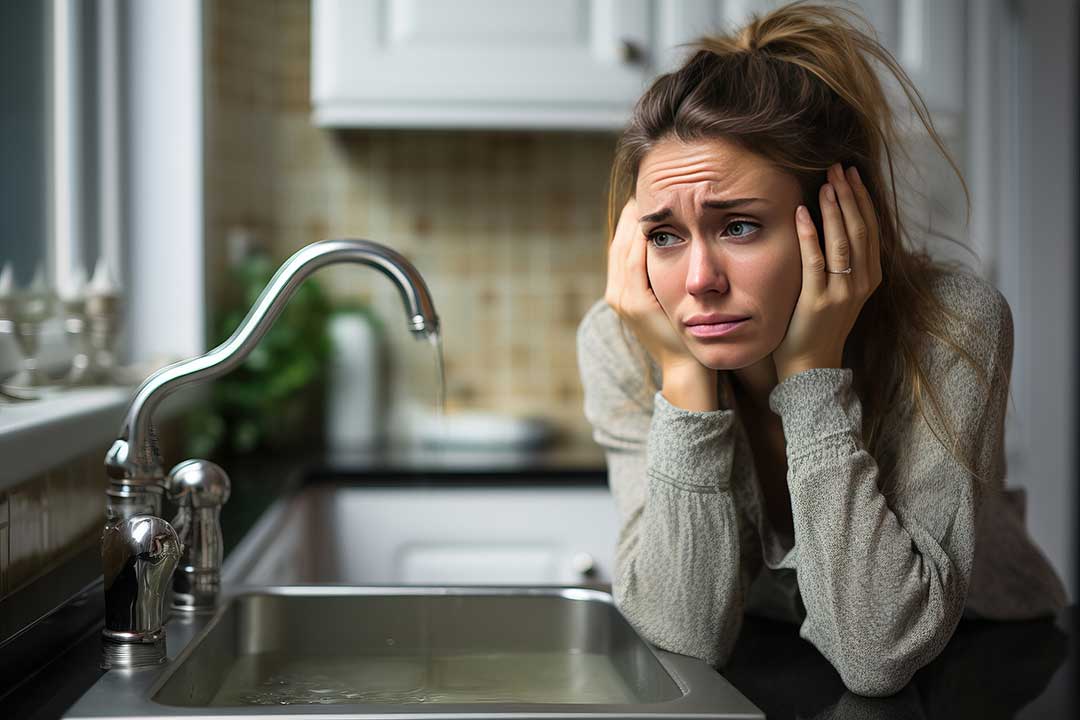
Using chemicals repeatedly can delay identifying the cause. The drain may temporarily improve, but the underlying obstruction remains and may eventually cause an overflow.
What should residents do instead of using harsh chemicals?
The safest approach depends on the type of drain and the nature of the blockage. Begin with low-risk methods that do not introduce hazardous substances into the plumbing.
For a sink or bathtub:
- Remove and clean the stopper, strainer, or drain cover.
- Pull out visible hair or debris with a small plastic drain tool.
- Use a properly sized plunger with enough water to cover the cup.
- Clean the sink trap only if no chemical cleaner has been used recently.
- Flush with hot tap water, avoiding boiling water if the fixture or piping could be damaged by extreme heat.
Mechanical tools, such as a hand-operated drain snake, can sometimes remove a blockage more directly than chemicals. The tool should be used carefully to avoid damaging the drain or pushing the obstruction deeper.
Baking soda and vinegar are often presented as a harmless substitute, but they are not a dependable solution for significant blockages. The bubbling reaction may loosen light residue, yet it generally cannot remove a dense obstruction.
What if chemical cleaner has already been used?
Treat the drain as contaminated until the product has been thoroughly diluted and the label’s instructions have been followed. Do not immediately plunge the drain, disassemble the trap, or insert a hand into standing water. Pressure from plunging can cause caustic liquid to splash back.
Keep children and pets away from the area. If fumes are strong, leave the space and avoid leaning over the drain. Do not attempt to neutralize the product with another household chemical.
Anyone with chemical burns, eye exposure, persistent coughing, breathing difficulty, chest discomfort, vomiting, or severe irritation needs prompt medical guidance. For eye or skin exposure, follow the product label and poison-control instructions. Remove contaminated clothing and rinse exposed skin or eyes with clean running water when directed by emergency guidance.
A plumber may need to know the exact product used, how much was poured, and when it was applied. Keeping the container or photographing its label can provide useful information, but it should not be handled if the container itself is contaminated.
Are chemical drain cleaners safe for septic systems?
Some products may be labeled for septic systems, but that does not make them harmless to people, pipes, or the environment. A septic system depends on biological activity, and repeated introduction of harsh chemicals can disrupt that balance. Products that enter wastewater also require careful handling because improper disposal can affect household plumbing and local water quality.
The label should be followed precisely, and leftover chemicals should never be poured onto soil, into storm drains, or into a different fixture. Septic concerns are especially relevant for properties that are not connected to a public sewer system.
When is a clogged drain a safety issue?
A clog deserves more caution when several fixtures are affected, wastewater is backing up, sewage odors are present, or a drain has already received chemical cleaner. These conditions can indicate a blockage beyond a single fixture or expose occupants to contaminated water.
Stop using affected fixtures when wastewater rises or backs up. Avoid contact with the water, disinfect surfaces appropriately after the source is controlled, and keep chemical products away from children and pets.
For routine prevention, use drain screens, avoid pouring grease into sinks, wipe food scraps into the trash, and address slow drainage early. A mechanical or diagnostic solution is usually safer than repeatedly adding corrosive chemicals to the plumbing system.